Why I Believe Martial Arts Can Help Children and Adults with Autism (ASD)
Autism Spectrum Disorder (ASD) is a neurodevelopmental condition that can affect how a person thinks, communicates, and moves. Individuals with ASD often face challenges with:
-
Social skills and behaviour
-
Emotional regulation
-
Focus and memory
-
Executive functioning (planning, following instructions)
-
Physical abilities like coordination, posture, balance, and strength
These challenges can make day-to-day life more difficult. But there is growing evidence that structured, skill-based exercise—like martial arts—can provide meaningful support.
How Martial Arts Benefits People with Autism
Whether it’s Karate, Kickboxing, or Tai Chi, martial arts provides a unique combination of discipline, repetition, and movement that supports both physical and emotional development.
Research shows that martial arts can help improve:
-
Focus and executive functioning
-
Behaviour and self-discipline
-
Coordination and motor planning
-
Core strength, posture, and stamina
-
Emotional regulation and confidence
The structure and predictability of martial arts can be especially comforting for individuals with ASD. It also provides opportunities for goal-setting, sensory input, and social interaction—all within a supportive environment.
What I’ve Seen in My Own Clients
As an exercise physiologist and martial arts coach, I’ve worked with many clients on the spectrum—both children and adults. The results have been inspiring.
One student who initially struggled to step over a skipping rope now confidently completes 2–5 jumps in a row. Another learned to coordinate boxing punches across their body, a skill that requires both motor planning and midline crossing—something many people with ASD find challenging.
Over time, my clients show:
-
Stronger balance and coordination
-
Better body control and spatial awareness
-
Increased stamina and energy
-
Improved emotional control
-
A greater sense of confidence and independence
What a Martial Arts Session for ASD Includes
Martial arts training can be adapted to meet each individual’s needs. Sessions may include:
Shadow Striking
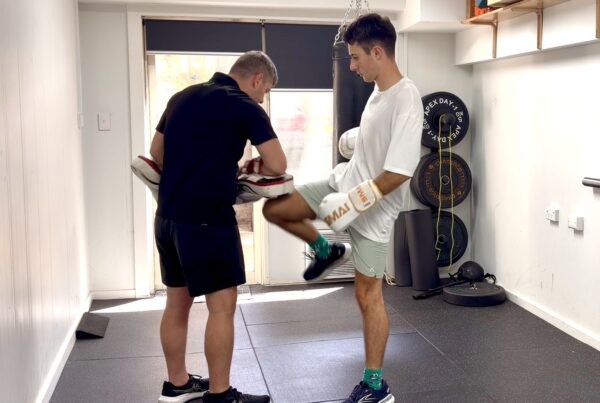
Practising punches and kicks in the air to build body awareness, rhythm, and form.
Pad Work
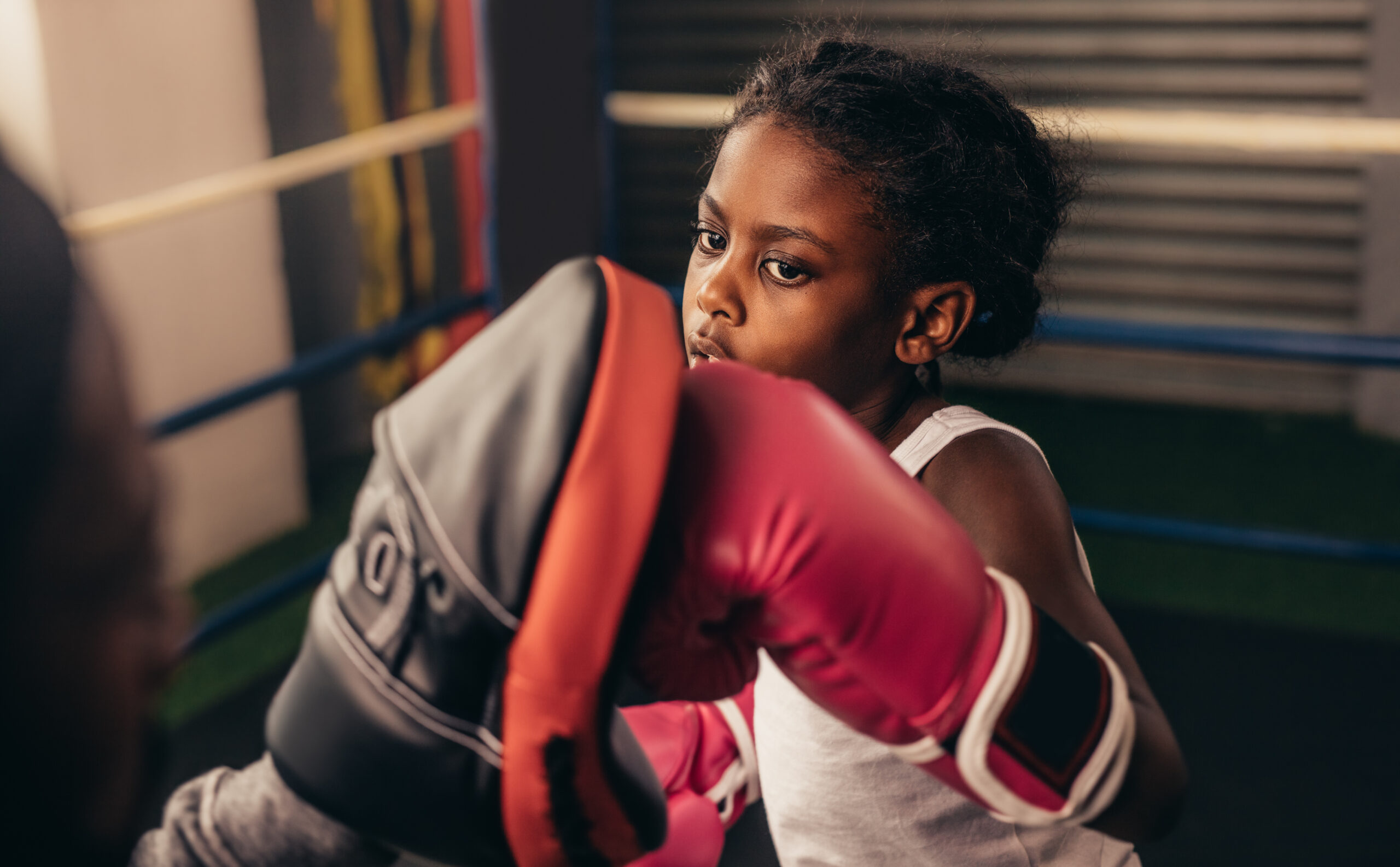
Striking shields, bags, or focus mitts to improve coordination, timing, and power.
Footwork Drills
Learning specific movement patterns and stances to enhance balance and agility.
Dodging & Reaction Work
Training to avoid non-contact strikes and build spatial awareness and reaction time.
These activities are both fun and functional, helping individuals develop skills they can use in everyday life.
Why This Work Matters to Me
Working with clients who have ASD is some of the most rewarding work I’ve done. It can be challenging—but the progress is incredibly fulfilling.
Seeing a student go from feeling unsure to standing tall and striking with confidence is a transformation that goes beyond sport. Martial arts gives them a sense of capability and control—both physically and mentally.
For many of my clients, it’s the first time they’ve felt connected to a sport that makes sense to them. And that connection can be life-changing.
Final Thoughts: Martial Arts as a Tool for Growth
Martial arts offers far more than physical fitness. For individuals with ASD, it supports emotional development, builds coordination, and boosts self-esteem—all in a safe, structured, and empowering environment.
If you’re a parent, caregiver, or educator exploring supportive therapies for a loved one with autism, martial arts is worth considering. It’s not just a form of movement—it’s a path to confidence, connection, and independence.
Contact us to book an Initial Consultation with Michael to get started.